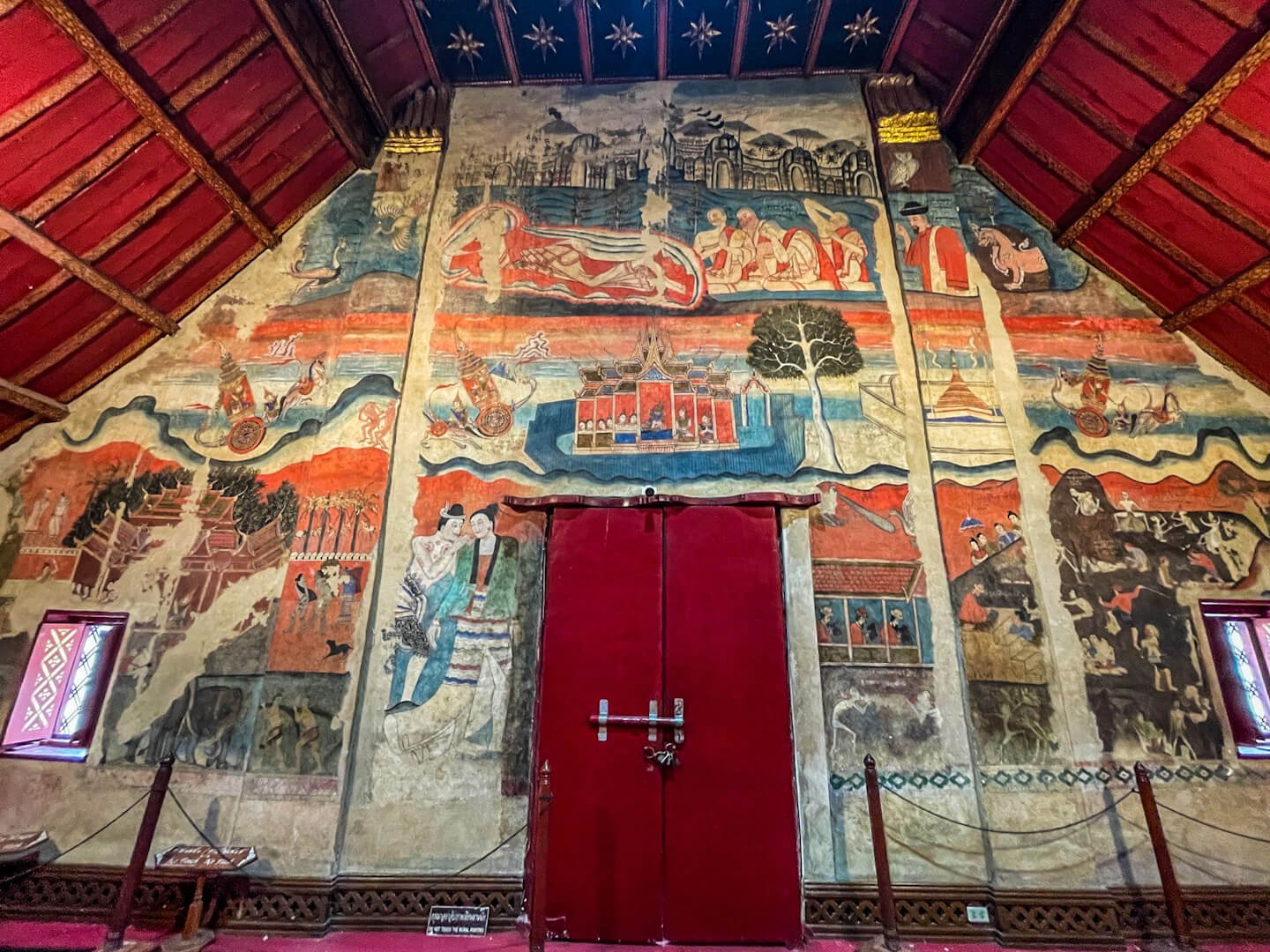
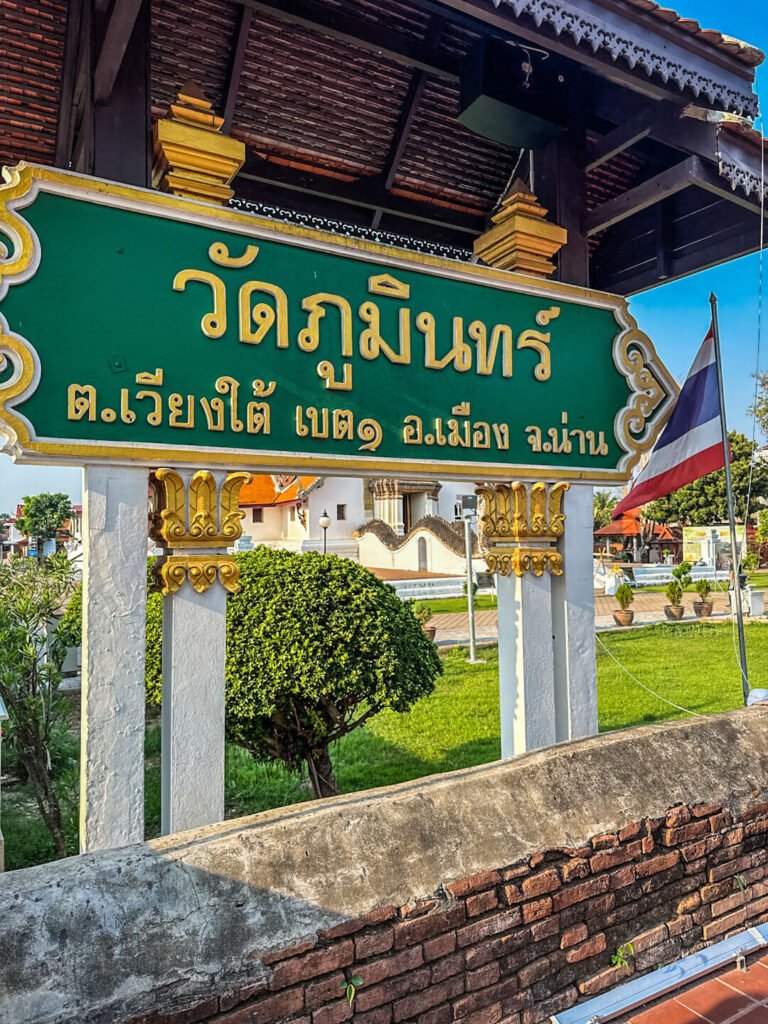
Nan, a quiet town tucked into Thailand’s northern hills, feels like stepping back in time. Life moves slowly here, with misty mornings, teakwood houses, and a river that winds lazily through the valley. In the center of town sits Wat Phumin, Nan’s most beloved temple — and the only one in Thailand built to look like a giant cruciform-shaped building sitting on a wooden boat.
Walk inside and you’ll notice something special. At the center, four golden Buddhas sit back-to-back, facing the four directions, as though blessing every corner of the world. But what really makes Wat Phumin unforgettable are its murals — a true treasure of northern Thai art.
These murals were painted more than a century ago, during the late 19th century, when Wat Phumin underwent a major restoration under King Rama IV or V. Local Thai Lue artist Thit Buaphan was commissioned to bring the temple’s walls to life. Instead of sticking to just Buddhist stories, he painted Nan’s people as they were: merchants at the market, women chatting, monks walking to collect alms, foreign traders passing through. He captured a living, breathing portrait of Nan’s culture at the time.
And then there are Pu Man and Ya Man — the couple at the heart of the mural known as “The Whisper of Love.”
At first glance, it’s such a simple image: a man, bare-chested with intricate tattoos, leans toward a woman, whispering something just for her. His hand rests gently on her shoulder. She tilts her head toward him, smiling shyly. It feels intimate, private, like a snapshot of a moment we were never meant to see.
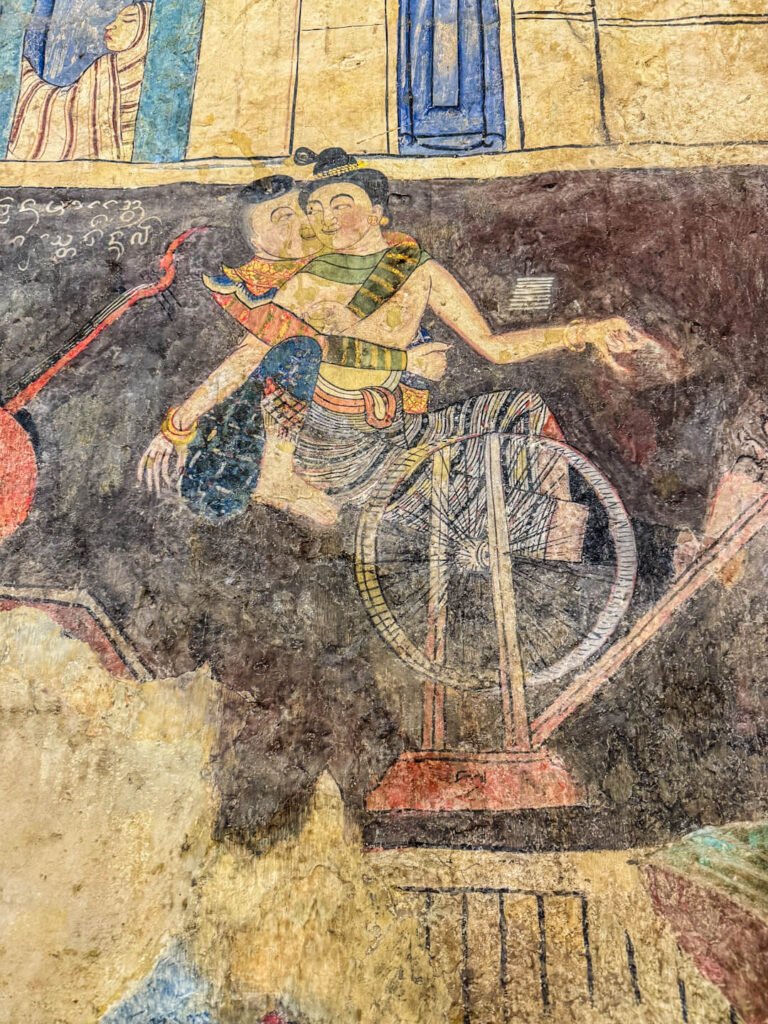
It was painted during the late 19th century
Around them, everyday life in Nan continues — but it’s this pair that steals everyone’s attention. Some say he’s whispering sweet nothings, others think it’s a secret or wise advice. Local guides love to say it’s a promise of love, and couples visiting the temple often pose just like them — hand to mouth, leaning close — keeping the conversation going across centuries.


The intimacy of this image was unusual for temple art of its time, which usually focused on religious teachings. Here, Thit Buaphan painted not just the spiritual life of Nan but the emotional life too — love, trust, and tenderness, right there on the temple wall alongside the Buddha’s teachings.
The Symbol of Nan
Today, “The Whisper of Love” has become the symbol of Nan. You see it on postcards, souvenirs, and city art. Some people even believe that if you stand before the mural and whisper a wish for love, it might just come true.
Whether you come for history, art, or a little bit of magic, standing before Pu Man and Ya Man feels like stepping into a quiet, eternal moment — a reminder that love, like good art, never really fades.